
Preserving History Through Digital Archive Organization
January 2026
Some things are worth preserving simply because they tell a story.
For families, that might be a box of photographs passed down through generations. For an organization, it can be decades of records, photographs, meeting minutes, and documents that capture the people, decisions, and moments that shaped its history.
That was the case when Fleur de Lis Organized Solutions partnered with the Conrad-Caldwell House Museum, one of Louisville’s most treasured architectural landmarks, on a project to organize and digitize its historical archives.
Bringing Order to Decades of History
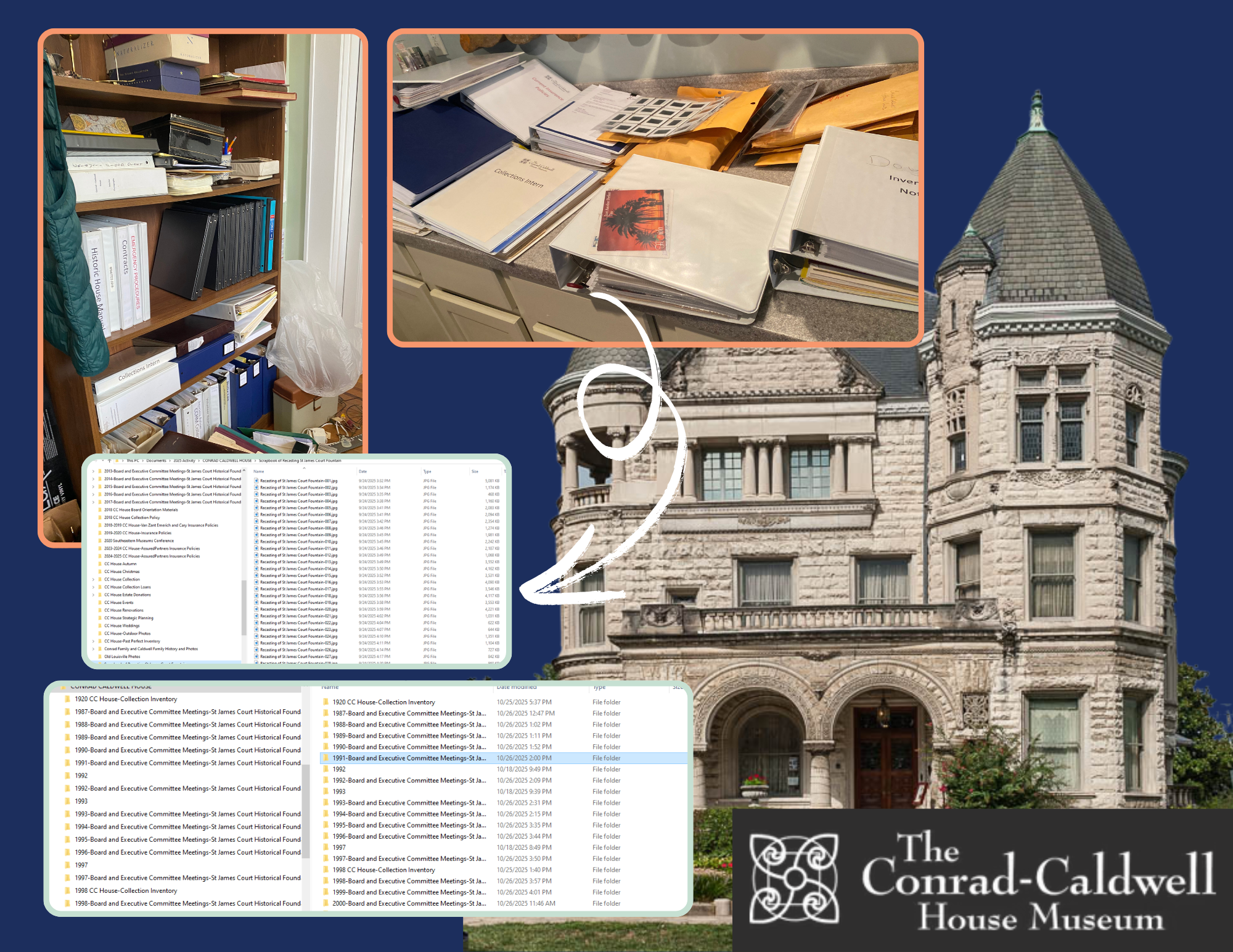
Over the course of the project, our team worked with thousands of archival materials, including photographs, slides, board meeting minutes, collection inventories, and other important historical records.
Each piece represented a small part of the museum’s larger story.
Like many organizations with a long history, these materials had accumulated over time. Important information was stored in filing cabinets, boxes, and physical files, making it more difficult to quickly locate, access, and share the records when they were needed.
The goal wasn’t simply to make the archives look more organized.
It was to make the information more accessible, more secure, and easier to preserve for the future.
Through digital archive organization and document digitization, Fleur de Lis Organized Solutions helped transform these physical materials into organized digital records that can be searched, accessed, and shared by the museum’s staff and volunteers.
Why Digital Archive Organization Matters
Digitizing historical documents and photographs can do much more than reduce the amount of paper an organization has to store.
A thoughtfully organized digital archive can help protect important records from physical deterioration, make information easier to locate, and give future staff, volunteers, researchers, and community members greater access to an organization’s history.
For an institution like the Conrad-Caldwell House Museum, these records are more than paperwork.
They are part of Louisville’s cultural heritage.
Historical photographs can provide visual connections to the past. Board meeting minutes can document important decisions and milestones. Collection inventories can help preserve knowledge about artifacts and materials. Together, these records create a valuable historical archive that can support future exhibitions, research, education, and storytelling.
When those materials are digitized and organized, their stories become easier to find and share.
From Filing Cabinets to a Searchable Digital Archive
One of the greatest benefits of document digitization is accessibility. Instead of searching through boxes or filing cabinets to locate a specific record, organized digital files can provide a much more efficient way to find the information you need.
For organizations managing years or even decades of records, that accessibility can make an enormous difference.
Digital archiving also provides an important opportunity to preserve materials that may otherwise be vulnerable to age, handling, environmental conditions, or simple loss over time.
Of course, digitizing records is only part of the process. Without a thoughtful organizational system, thousands of digital files can quickly become just as overwhelming as thousands of paper documents.
That’s why digital photo organization, document organization, consistent file structures, and thoughtful digital preservation are so important. The goal is to create an archive that is not only digital, but genuinely useful.
Preserving More Than Documents
Projects like this are a meaningful reminder that organization is about much more than creating tidy spaces. It is about making sure the things that matter can continue to serve a purpose.
For a family, that might mean organizing generations of photographs so children and grandchildren can understand where they came from.
For a business or nonprofit, it might mean creating an accessible digital archive of important records.
For a historic institution, it can mean helping preserve a community’s story for generations to come.
At Fleur de Lis Organized Solutions, we approach every archive with that bigger picture in mind. Whether we are organizing a family’s photographs or helping an organization digitize historical records, our work is rooted in the same philosophy: what matters deserves to be preserved, organized, and accessible.
Preserving Louisville’s Stories for the Future
The Conrad-Caldwell House Museum project was a wonderful example of how thoughtful digital archive organization can help protect an organization’s legacy.
What once lived across filing cabinets and boxes is now organized into a digital archive that can support the museum’s future work.
That means staff and volunteers can more easily access important materials. Researchers can find information more efficiently. Future exhibitions can draw from a more accessible collection. And the stories contained within those records have a better opportunity to continue being shared.
History is made up of individual moments, memories, photographs, documents, and stories.
Organization helps make sure those pieces don’t get lost.
If your family, business, nonprofit, or organization has boxes of photographs, historical documents, or important records waiting to be organized and digitized, Fleur de Lis Organized Solutions can help you create a thoughtful plan for preserving what matters most.
Ready to bring order to your archives? Schedule a complimentary discovery call with Fleur de Lis Organized Solutions to talk about your project.
